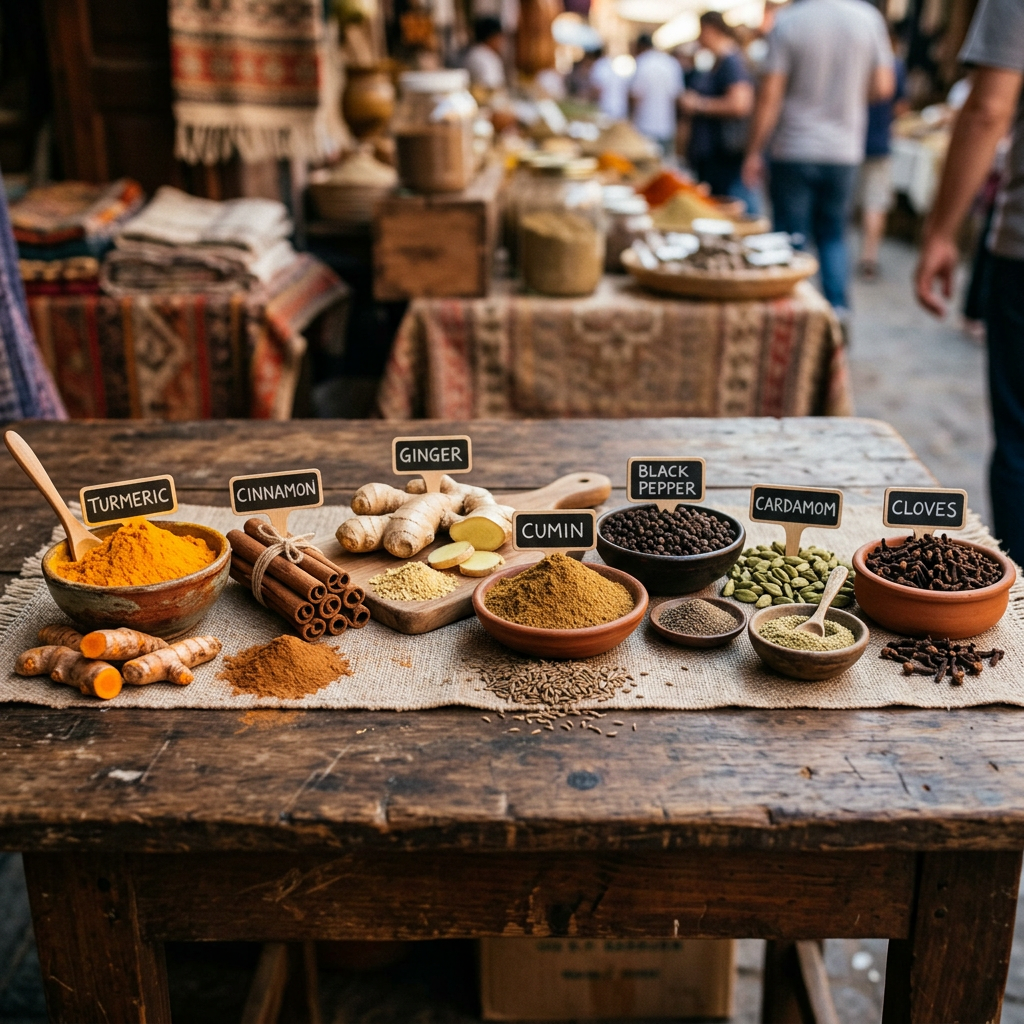
We often hear people say, “His or her health is suffering because they consume too much oil and spices.” While this may sound logical at first, should we really put oil and spices in the same category when it comes to health? More importantly, are spices themselves responsible for poor health, or have we simply developed an unfair perception of them?
For centuries, spices have been an important part of traditional Indian cuisine and Ayurveda. They were valued not merely for their ability to add flavor and aroma to food, but also for their perceived therapeutic properties. Ayurveda considers different spices useful for supporting digestion, circulation, and overall balance in the body, with their use traditionally guided by an individual’s dosha, constitution, and specific needs.
So, how did something that has been traditionally valued for its health properties come to be viewed as harmful?
Is “spicy food” actually unhealthy, or is the problem more often the oil, salt, refined ingredients, and cooking methods that accompany it? Are some spices beneficial while others may cause problems? And what does modern scientific research tell us about the spices sitting in our kitchen cabinets?
In this article, we will look beyond common beliefs and examine spices from a health and nutrition perspective—separating fact from perception and exploring whether spices deserve their reputation as something we should avoid or whether they may actually be an overlooked part of a healthy diet.
Spices and Inflammation: More Than Just Flavor
As discussed earlier, spices have been used for centuries not only to flavor food but also for their potential therapeutic properties. Among them, turmeric, ginger, and garlic have attracted considerable scientific attention because of their anti-inflammatory and antioxidant properties.
Turmeric, being the most anti-inflammatory food on earth[1], is particularly interesting. Its major active compounds, known as curcuminoids, have been extensively studied for their ability to influence inflammatory pathways. Several meta-analyses of randomized controlled trials (RCTs) have reported reductions in certain inflammatory markers following curcumin, although the results vary depending on the formulation, dose, and population studied.
Ginger is another spice with an interesting history. Ginger powder has been used to successfully treat rheumatoid arthritis[2]. Its pain-reducing effects have the same effect as that of ibuprofen[3] and it’s protective rather than damaging the stomach lining. A pinch of ginger powder has the same effect as the migraine headache drug Imitrex without side effects. One teaspoon a day helps significantly lessen menstrual pain and heavy bleeding[4]
There is also a fascinating difference between fresh and dried ginger. Drying changes ginger’s chemical composition, increasing some compounds such as shogaols. This may help explain why dried ginger, or saunth, has traditionally been used in Indian households and incorporated into foods given to women during the postpartum period.
Garlic is equally intriguing. Its sulfur-containing compounds, particularly those produced when garlic is chopped or crushed, have been studied for their antioxidant, cardiovascular, and anti-inflammatory properties. Research has even investigated garlic preparations in people with rheumatoid arthritis [5]and reported improvements in some measures of disease activity and symptoms.
So perhaps the traditional use of these ingredients deserves more than a casual dismissal as “old-fashioned remedies.”
The Spice Rack Is Bigger Than Turmeric
The potential benefits of spices don’t end with turmeric, ginger, and garlic.
Cloves, rosemary, cinnamon (Ceylon and not cassia), oregano, basil, cumin, coriander, and paprika all contain different plant compounds that may have antioxidant or anti-inflammatory effects.
This is important because every plant contains its own unique combination of phytochemicals. Eating a variety of herbs and spices may therefore expose us to a much wider range of naturally occurring compounds than relying on one so-called “superfood.”
One human study looking at several herbs and spices found that rosemary, ginger, turmeric, paprika, sage, and cumin could help protect blood cells against experimentally induced DNA strand breaks.
That, in itself, is a fascinating reminder that food is much more than calories, carbohydrates, protein, and fat.
Black Cumin: A Spice with Metabolic Benefits
Meta-analysis of RCTs has found that daily consumption of black cumin, also known as Nigella sativa, significantly improves cholesterol, triglycerides, blood pressure, and blood sugar control. Black cumin may also help alleviate menopausal symptoms. Just a quarter teaspoon of black cumin powder daily appears to reduce body mass index within a couple of months.
Saffron: A Spice with Potential Beyond the Kitchen
Saffron is perhaps best known for its distinctive flavor, aroma, and high price. But it has also attracted attention for its potential effects on mental health.
A systematic review of clinical studies identified six randomized trials examining saffron for depression. The review[6] found promising results, including effects that appeared comparable to antidepressant medications (prozac) in some studies, although the authors emphasized that more research was needed.
This is an interesting finding, but it should not be interpreted as suggesting that saffron can replace antidepressant medication.
Daily doses are considered safe up to 1.5 g a day. Taking 5 or more grams a day can cause serious reactions, and overdoses involving 12 to 20 grams a day may be fatal.
Can Spices Protect Our DNA?
Spices may also play a role in protecting our DNA from oxidative damage. One study[7] found that consuming 2 teaspoons of rosemary, ¾ teaspoon of paprika, or just 1/10 teaspoon of cooked turmeric daily for one week helped protect against DNA strand breakage. Similarly, consuming ¼ teaspoon of amla daily was associated with reduced oxidative DNA damage[8].
Each of us contains tens of billions of miles of DNA. How does our body prevent it from getting all twisted and tangled? Sirtuins are enzymes involved in maintaining cellular health and regulating DNA-associated proteins. In a study of people with fatty liver disease, those consuming ½ teaspoon of green cardamom three times a day with meals for 3 months showed improvements in liver function and systemic inflammation, along with a significant increase in circulating sirtuin levels[9]. Cardamom consumption was also associated with a reduction in triglyceride levels of approximately 20 mg/dL[10].
The underlying message here is:
The foods we eat contain thousands of compounds that can interact with our cells in ways we are only beginning to understand.
And this is one of the strongest arguments for dietary variety. Instead of searching for one miracle food, we should consume a wide range of plant foods, herbs, and spices.
Spices and the Aspirin Connection
There is another interesting connection between spices and inflammation: salicylates.
Aspirin is commonly prescribed as a blood thinner for people with certain cardiovascular conditions or a history of stroke. It contains acetylsalicylic acid, which is broken down in the body into an acetyl group and salicylic acid. The acetyl group is responsible for inhibiting platelet activity, thereby reducing the blood’s tendency to clot. Salicylic acid, on the other hand, has anti-inflammatory properties. Interestingly, many herbs and spices naturally contain salicylates, allowing us to obtain these compounds through food.
Dried basil, chili powder, coriander, oregano, paprika, and turmeric contain appreciable amounts of salicylic acid, while cumin appears to be one of the richest sources. In fact, one teaspoon of ground cumin may contain more salicylic acid than a low-dose aspirin[11]
Is More Spice Mean Better Health?
Is more spice better, or should we limit it to a minimum? The spicier, the better. A spicy vegetable vindaloo has been calculated to contain 4 times as much salicylic acid-type compounds as a milder veggie dish. Approximately 1 in 4 vegetarians tested in rural India had blood levels above the lower end of those taking aspirin every day[12]. This could explain why India, with its traditionally spice-rich diets, has among the lowest worldwide rates of colorectal cancer [13]– the cancer that appears most sensitive to aspirin’s effect.
However, it comes with a caveat—for most people, using a generous variety of culinary herbs and spices is perfectly reasonable. But extremely spicy food can cause discomfort in people with acid reflux, gastritis, or other gastrointestinal sensitivities.
More importantly, spicy does not automatically mean healthy.
A deep-fried food containing large amounts of oil, salt, and refined carbohydrates does not become healthy simply because it contains turmeric, chili, or cumin.
Conclusion: Perhaps We Should Stop Blaming the Spice
After looking at the evidence, it seems unfair to place oil and spices in the same nutritional bucket.
Excessive oil can significantly increase the calorie density of a meal. Spices, in contrast, are used in small quantities and can provide a diverse range of phytochemicals, antioxidants, and other biologically active compounds.
Turmeric, ginger, garlic, cumin, cloves, rosemary, cinnamon, cardamom, and saffron all offer interesting examples of how ordinary ingredients can interact with our biology.
A healthy diet doesn’t have to be bland. In fact, spices can help us make vegetables, legumes, and whole grains more enjoyable while reducing our reliance on excessive salt, sugar, and fat.
Don’t fear the spice rack. Understand it, use it wisely, and let healthy food be flavorful.
- https://pubmed.ncbi.nlm.nih.gov/23941862/ ↑
- https://www.oarsijournal.com/article/S1063-4584(14)01276-X/fulltext ↑
- https://www.researchgate.net/publication/235007127_Comparing_the_Effects_of_ginger_Zingiber_officinale_extract_and_ibuprofen_On_patients_with_osteoarthritis ↑
- https://onlinelibrary.wiley.com/doi/10.1002/ptr.5235 ↑
- https://onlinelibrary.wiley.com/doi/10.1002/ptr.6225 ↑
- https://pubmed.ncbi.nlm.nih.gov/25384672/ ↑
- https://pubmed.ncbi.nlm.nih.gov/23378457/ ↑
- https://pmc.ncbi.nlm.nih.gov/articles/PMC6926135/ ↑
- https://pmc.ncbi.nlm.nih.gov/articles/PMC6156864/ ↑
- https://pubmed.ncbi.nlm.nih.gov/31755188/ ↑
- https://pubmed.ncbi.nlm.nih.gov/31625548/ ↑
- https://pubmed.ncbi.nlm.nih.gov/16608205/ ↑
- https://pubmed.ncbi.nlm.nih.gov/16608205/ ↑

Leave a Reply